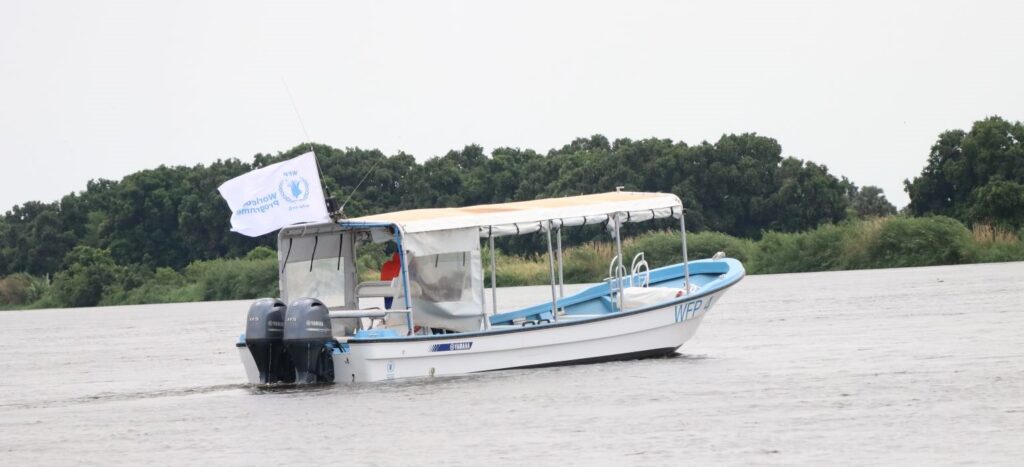
Several foreign embassies and the European Union have spoken out after a World Food Programme food convoy was attacked in South Sudan’s Upper Nile State, raising concern over the safety of humanitarian operations in the country.
In a joint statement released on Friday, the embassies of Canada, France, Germany, Japan, the Netherlands, Norway, the United Kingdom, and the United States, together with the European Union Delegation, condemned the “recent attack and looting of twelve World Food Programme boats.”
The vessels were carrying more than 1,500 metric tons of food supplies meant to assist 73,000 people facing severe food shortages.
The diplomats said the attack directly disrupted aid delivery to communities already struggling with hunger and displacement. They called on the transitional government to respond without delay and take responsibility for recovering the stolen items.
According to the statement, the embassies urged authorities to take “prompt actions to recover the food as well as other resources stolen from implementers that were aboard the boats.”
They stressed that international donor support for humanitarian work in South Sudan must reach those in crisis and deliver the “greatest possible life-saving impact.”
The group strongly condemned the violence against aid operations, stating that “Attacks on humanitarian and medical facilities are entirely unacceptable.”
They also appealed to South Sudan’s leadership, urging leaders “of all parties and at all levels” to ensure conditions are in place for the “unhindered delivery of assistance” to people affected by famine, malnutrition, and conflict-related displacement.
The statement further outlined the broad role played by the World Food Programme, noting that the agency not only responds to emergencies but also provides early warnings to help reduce the effects of future disasters.
WFP also supports countries in moving beyond hunger toward long-term development and self-reliance.
In addition, WFP works to improve nutrition among women and children, assists smallholder farmers to raise productivity and limit food losses, and helps communities prepare for climate-related shocks. The organisation also supports education through school feeding programmes aimed at strengthening human capital.
During times of conflict, WFP delivers food assistance to populations under extreme strain and uses relief efforts to help promote peace and stability. The agency partners with governments, other United Nations bodies, non-governmental organisations, private companies, and other actors to mobilise resources, develop new approaches, and reach vulnerable communities with the support they require.































Comments
Sign in with Google to comment, reply, and like comments.
Continue with Google